Vaishno Devi Helicopter vs Trek: Which Option Should You Choose?
Cost, time, effort and weather risk compared honestly. The helicopter is not always the better choice, even for people who can afford it.
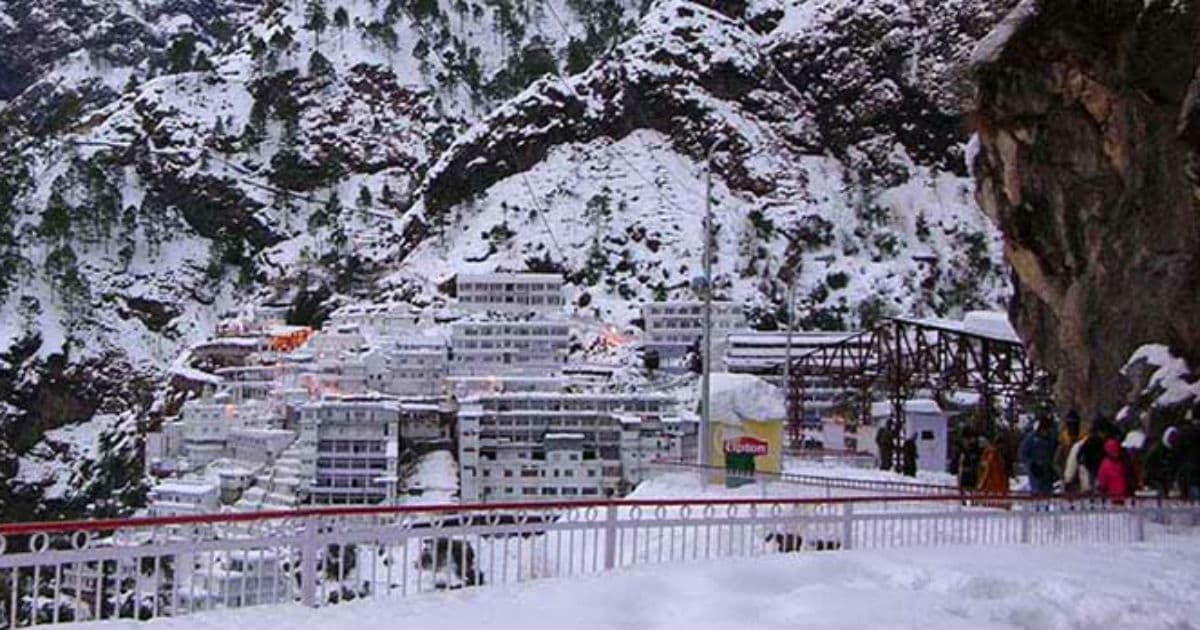
Vaishno Devi helicopter versus trek comes down to three honest questions: can everyone in your group manage a long climb, how much time do you have, and what are you willing to spend. The helicopter costs ₹2,320 one way and leaves a 2.5 km walk. The trek is free and runs 13 km each way, typically five to seven hours up.
There is no single right answer. After fifteen years of sending families up this hill from our office in Katra, we can tell you the helicopter is not always the better choice even for people who can comfortably afford it.
The two options side by side
| Factor | Helicopter | Trek |
|---|---|---|
| Distance you cover | 2.5 km walk after landing | 13 km each way |
| Time to the Bhawan | 8 min flight plus a short walk | 5 to 7 hours up |
| Cost per person | ₹2,320 one way, ₹2,700 from 1 Nov 2026 | Free on foot |
| Effort | Very low | High, steep in parts |
| Weather risk | Grounded in fog, rain or low cloud | Walkable in almost all conditions |
| Booking stress | Seats sell out in minutes, 60 days ahead | Just the free Yatra Parchi |
| Priority darshan | Not included on the Katra sector | Not included |
| Suits | Elderly, health issues, tight schedules | Fit walkers, devotional walkers, tight budgets |
The current fare and every add on is broken down in our 2026 helicopter ticket price guide, including what the fare does not cover.
The case for the helicopter
If you are travelling with elderly parents, anyone with a knee or heart condition, or small children, the helicopter is worth every rupee. It removes the part of this trip that genuinely defeats people, and it removes it from the ascent, which is the half that hurts. It also fits a working family's schedule: a morning flight can have you back in Katra by lunch with darshan done.
The trade offs are real. Seats are scarce and disappear within minutes on peak dates, so you are committing to a plan 60 days out. Fog or rain can ground a flight with very little notice, which means you need a flexible day in hand. And the flight only takes you to Sanjichhat, so there is still 2.5 km between the landing and the shrine, which is the detail people most often miss.
The case for the trek
The 13 km walk from Banganga to the Bhawan is the yatra as most devotees picture it, and it is far more doable than the distance suggests. The track is fully paved, lit through the night, and lined with tea stalls, shelters and clean toilets the entire way. You are never alone on it, at any hour.
Two routes climb from Katra. The old Banganga track is shorter and busier, shared with ponies and the noise and mess that come with them. The newer Tarakote Marg runs about 7 km to Ardhkuwari, is pedestrian only with no pony traffic, and is noticeably cleaner and gentler underfoot. Many families now walk up Tarakote and take the battery car for the last stretch from Ardhkuwari, which is a sensible middle path that costs ₹450 rather than ₹2,320.
If money is tight, this matters: the difference between a ₹7,500 trek trip and a ₹13,250 helicopter trip is largely the flight. You can see both on our Vaishno Devi tour packages page, where the 3 day trek package is our most booked plan by a wide margin.
The honest middle path
Most families do not need to pick an extreme, and the best plans we write rarely do. Two combinations work particularly well.
Fly up, walk down. You buy one way, skip the climb and the worst of the queue, then descend at your own pace with gravity helping. This is the strongest option for a group with mixed fitness, and it halves the weather exposure because only one leg depends on a flight.
Trek up, fly down. You get the yatra you came for on the way up, then spare your knees on the descent, which is where most injuries actually happen. Less common, but the right answer more often than people think.
Buying a one way ticket for whichever direction you find harder is frequently the smartest money on the whole trip.
What about Navratri?
Both options change during Navratri, which in 2026 falls on 19 to 27 March and 11 to 20 October. Helicopter seats for those dates go within minutes of the booking window opening, and Katra hotel rates roughly double. The track is shoulder to shoulder but moves, and the atmosphere is the reason many people come. If your dates are fixed inside a Navratri, book six to eight weeks out and assume the helicopter may simply not be available.
Frequently asked questions
Is the Vaishno Devi helicopter worth it?
For elderly pilgrims, anyone with health issues, small children or a tight schedule, yes. For a fit walker on a flexible budget the trek is free, genuinely rewarding, and more reliable because it never gets grounded by weather.
How long is the Vaishno Devi trek?
About 13 km each way from Banganga to the Bhawan, typically five to seven hours up on foot and rather less coming down. The track is paved, lit through the night and open around the clock.
Which trek route is easier, Banganga or Tarakote Marg?
Tarakote Marg is gentler, cleaner and pony free, running about 7 km to Ardhkuwari. Banganga is shorter but busier and shared with ponies. Many families now prefer Tarakote for the ascent.
Can I fly one way and walk the other?
Yes, and it is a popular choice. Buy a one way ticket for the direction you find harder, usually the climb. It also halves your exposure to a weather cancellation.
Does the trek need any booking?
Only the free RFID Yatra Parchi, which every pilgrim needs whether they walk or fly. There is no trek ticket and no quota, so the track is always available to you.
Is the helicopter faster overall?
For the ascent, clearly yes. Across a whole trip it is less certain, because a grounded flight can cost you half a day, while the track is walkable in almost any weather.
Published by NorthYatra, a J&K Tourism registered agency operating from Railway Road, Katra since 2010. Helicopter fares as of 19 September 2026, rising 1 November 2026. Trek distances follow Shrine Board published route information.
Powered by Northy AI · answers from 15 years of planning these trips